
LadyBugz Team — B2B Marketing Specialists
“She formalised earlier practises of key account management and industrial marketing into a structured framework for arranging sales and marketing efforts around specific accounts.”
Key Takeaways
Account-Based Marketing transforms B2B sales by focusing resources on high-value accounts rather than broad lead generation, delivering measurable results through personalised engagement and strategic alignment.
- ABM delivers 87% higher ROI than traditional marketing, with companies reporting 38% higher win rates and 91% larger deal sizes
- Three ABM types exist: Strategic (1-10 accounts), ABM Lite (5-100 accounts), and Programmatic (hundreds to thousands of accounts)
- Success requires identifying ideal customer profiles, conducting deep account research, and creating personalised content for specific stakeholders
- Sales and marketing alignment is crucial—aligned teams achieve 36% higher retention rates and 24% faster revenue growth
- Measure success through account engagement metrics, pipeline velocity, and revenue impact rather than traditional lead-based metrics
When executed properly, ABM transforms target accounts into strategic partnerships, accelerating sales cycles by 28% whilst building stronger customer relationships that increase lifetime value and reduce churn.
What is Account-Based Marketing (ABM)?
Account-Based Marketing (ABM) is a business-to-business marketing strategy that concentrates resources on a defined set of high-value target accounts, treating each as a distinct market rather than pursuing broad-based lead generation. This strategic approach reverses traditional marketing methods by starting with specific accounts and creating personalised campaigns designed to participate with decision-makers within those organisations based on their unique attributes and needs.
Bev Burgess coined the term in 2003 at the Information Technology Services Marketing Association (ITSMA). She formalised earlier practises of key account management and industrial marketing into a structured framework for arranging sales and marketing efforts around specific accounts. ABM has evolved into a strategy accessible to more people over the last several years, with 96% of 500 marketers surveyed confirming they have a documented ABM strategy.
ABM operates on the principle of treating individual accounts as markets in their own right. This approach focuses marketing and sales resources on companies most likely to convert instead of casting a wide net to attract large volumes of leads. Each target account receives highly personalised one-to-one experiences and tailored content that addresses specific business
problems and speaks to individual pain points. Sales and marketing teams must work in synchronisation to achieve this level of personalisation, developing account-specific messaging and coordinating efforts to participate with multiple stakeholders within each target organisation.
The strategy is different from traditional demand generation by inverting the typical marketing funnel. ABM begins at the bottom of the funnel with pre-identified target accounts rather than attracting broad audiences and filtering for qualified leads. This focused methodology emphasises quality over quantity and dedicates resources to accounts with the highest revenue potential and greatest strategic value.
ABM delivers measurable business effects in multiple ways. B2B companies implementing ABM programmes report a 38% higher sales win rate and 91% larger deal sizes, contributing to 24% faster revenue growth. Companies with mature ABM programmes report it propels more ROI than any other marketing tactic, with 92% confirming this. B2B marketers agree that ABM provides higher ROI compared to traditional approaches, with 87% supporting this view. Organisations employing ABM for at least one year attribute revenue increases to its implementation, with 60% reporting this outcome.
The strategy serves as a complement to traditional lead generation rather than a replacement. It supports B2B marketing teams in increasing pipeline quality, retaining top accounts for extended periods and maximising revenue from existing customer relationships through upselling and cross-selling opportunities.
Why is Account-Based Marketing important?
ABM demonstrates measurable value across four dimensions that affect business performance and revenue generation.
Higher ROI and conversion rates
ABM concentrates resources on high-value accounts most likely to convert and eliminates wasted efforts on unqualified leads. This precision targeting produces superior financial returns. 87% of B2B marketers agree that ABM delivers higher ROI compared to traditional approaches. 85% of marketers describe ABM as delivering higher ROI than any other B2B marketing approach. The personalised nature of ABM campaigns results in higher conversion rates than traditional campaigns because messaging targets specific accounts with relevant content. Companies that implement ABM report 35% higher deal close rates, and ABM leads deliver three times higher conversion to pipeline compared to conventional methods. B2B companies with ABM programmes achieve 91% larger deal sizes, which correlates to increased revenue per transaction.
Shortened sales cycles
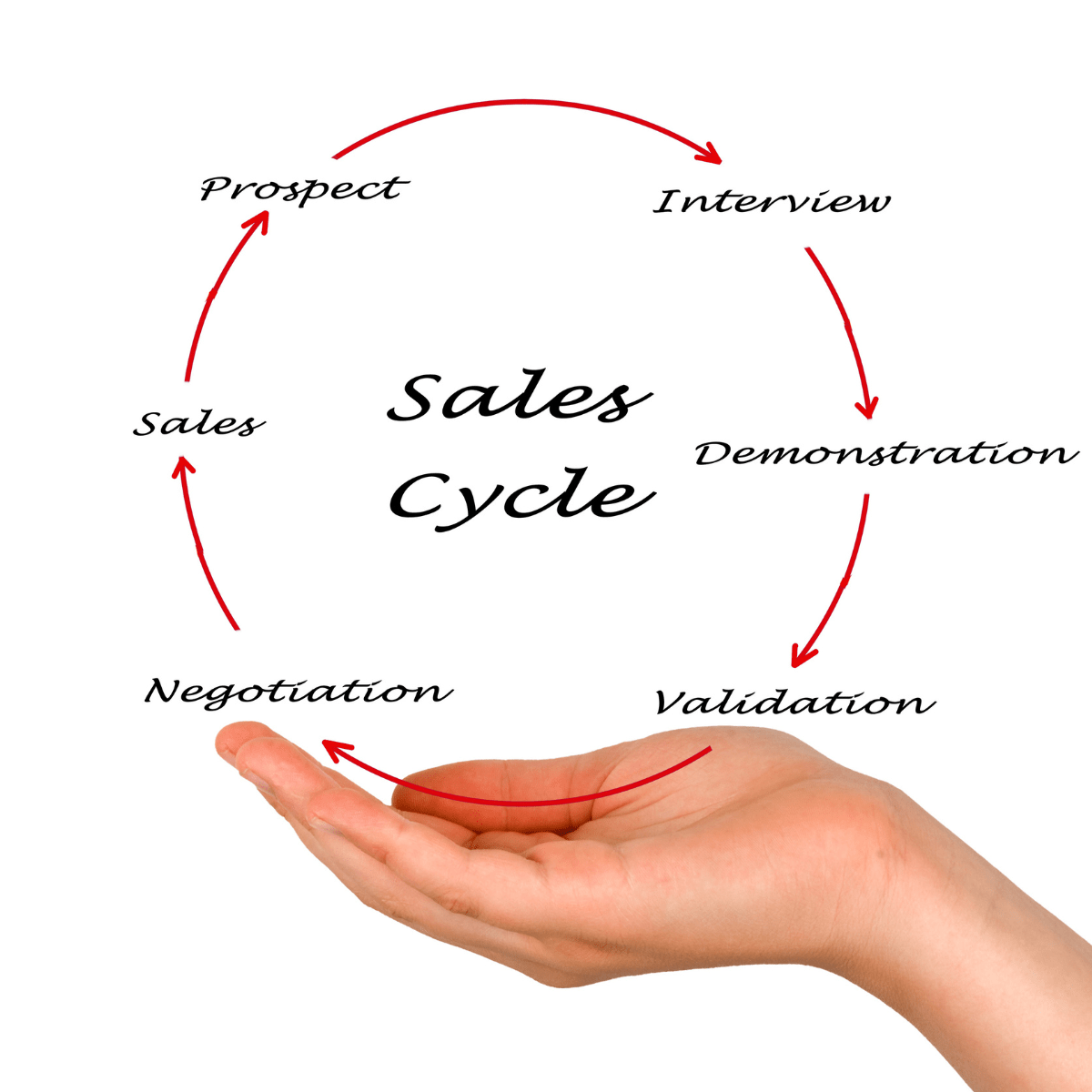
ABM speeds up the sales process by eliminating unqualified prospects early and targeting decision-makers with personalised content. Companies using ABM report 28% faster sales cycles on average. Organisations that implement ABM strategies experience a 30% reduction in time to opportunity and reduce their opportunity-to-close time by one month. This acceleration occurs because ABM engages multiple stakeholders within target accounts at the same time rather than progressing through organisational hierarchies one by one. Pipeline velocity increases as
marketing and sales teams focus on accounts most likely to convert and provide those accounts with highly personalised experiences that make quicker decision-making easier.
Better alignment between sales and marketing
ABM requires coordinated strategy between sales and marketing teams and produces organisational benefits that extend beyond individual campaigns. Seventy per cent of ABM users report their sales and marketing teams are aligned mostly or aligned completely, compared to 51% for non-ABM users. This alignment drives tangible business outcomes. Companies that achieve strong sales-marketing coordination report 36% higher customer retention rates and 38% higher win rates. On top of that, aligned organisations experience 24% faster revenue growth. The shared focus on similar target accounts creates natural interdependence between teams and establishes unified strategies and consistent messaging throughout the buyer’s trip.
Improved customer relationships
ABM’s personalised campaigns promote stronger relationships with key accounts by addressing specific needs and challenges. This tailored approach builds trust and loyalty over time and positions vendors as strategic partners rather than transactional suppliers. The relationship-centric methodology extends beyond acquisition to nurture existing customers through upselling and cross-selling opportunities. Sixty per cent of companies report ABM increases customer lifetime value, and 44% observe reduced customer churn when applying ABM in post-sale engagement.

Types of Account-Based Marketing
Three distinct ABM approaches exist. Each varies in scale, personalization depth, and resource allocation. These types form a strategic pyramid where organisations select based on account value, available resources, and revenue objectives.
Strategic ABM (One-to-One)
Strategic ABM represents the most personalised form of account-based marketing. It focuses on individual high-value accounts with custom campaigns. This approach treats one account as a market in its own right and targets between one and ten accounts that demonstrate most important revenue potential and strategic importance. The methodology requires substantial investment in time, budget, and dedicated resources. Content creators, designers, strategists, and analysts are all part of the team. Implementation involves detailed research into professional objectives, operational challenges, and stakeholder interests. Personalization levels reach 10-15% of campaign content. Strategic ABM proves most effective for existing high-value accounts. Sales, marketing, and executive teams work together to strengthen relationships through upselling and cross-selling opportunities. Account teams develop resilient relationships through targeted interactions that demonstrate deep understanding of business issues. ROI is measured over years rather than quarters.
ABM Lite (One-to-Few)
ABM Lite targets small account clusters of 5 to 100 accounts. These accounts share similar characteristics, challenges, or industry backgrounds. This mid-tier strategy maintains higher
personalization than programmatic approaches while requiring fewer resources than strategic programmes. Marketing teams identify target accounts with common attributes such as industry, company size, geographic location, or pain points. They then create semi-customised campaigns that address shared needs. The approach optimises resource allocation by developing reusable strategies across multiple accounts. Accounts are grouped by shared priorities rather than firmographic data alone. ABM Lite enables meaningful engagement without the extensive demands of one-to-one marketing. This makes it suitable for companies with flexible budgets seeking to target broader account sets without compromising personalization.
Programmatic ABM (One-to-Many)
Programmatic ABM employs technology and automation to scale personalised messaging across hundreds or thousands of accounts. This approach relies on marketing automation platforms, CRM systems, and intent data to deliver tailored campaigns at scale. Account groups receive broad segmentation based on industry verticals or shared demographics. Lighter personalization is supported by marketing technology tools. Organisations targeting up to 1,000 accounts benefit from this methodology when working with limited budgets and resources. The strategy maximises coverage and pipeline efficiency through evidence-based methods. Even large enterprises can reach extensive audiences while maintaining relevant engagement.

How to build an Account-Based Marketing strategy
Developing an effective account-based marketing strategy requires structured methodology that combines data analysis, cross-functional collaboration, and careful resource allocation across six foundational components.
Identify your ideal customer profile
The ideal customer profile establishes a detailed blueprint of organisations most likely to benefit from products or services while delivering the most important value in return. This profile incorporates firmographic data including company size, revenue, industry, geographic location, and growth trajectory among other technographic attributes that identify complementary technologies within target accounts’ existing infrastructure. ICP development just needs input from sales, marketing, and customer success teams to analyse existing customer bases and identify common characteristics among highest-value accounts. Organisations with strong ICPs report 68% higher win rates compared to those without clearly defined profiles. The profile should also incorporate buying committee structures and identify champions, decision-makers, and influencers within target organisations.
Select high-value target accounts
Account selection applies ICP criteria to identify specific organisations that warrant investment. Selection methodology combines firmographic and technographic data with intent signals that suggest active solution research. Third-party intent data reveals accounts that participate with relevant topics across external platforms, and first-party engagement data tracks existing interactions with brand assets. Predictive scoring models that make use of machine
learning can surface high-propensity accounts matching successful customer patterns. Organisations should prioritise accounts into tiers based on revenue potential. Strategic accounts receive maximum resources and programmatic accounts receive scaled approaches.
Conduct account research and mapping
Account mapping visualises organisational structures, decision-making processes, and stakeholder relationships within target accounts. Research sources include press releases, executive interviews, corporate reports, earnings calls, and social media updates to understand strategic initiatives and business priorities. Stakeholder mapping identifies all individuals involved in purchasing decisions and documents roles, responsibilities, influence levels, and personal objectives for each buying committee member. Organisations should update maps as personnel and priorities change. About 57% of buying committees experience compositional changes during sales cycles.

Create personalised content and campaigns
Content personalization addresses specific pain points and goals of individual stakeholders within target accounts. Campaigns should segment content into awareness-building materials, product-specific resources, expert-led authority, and conversion-focused assets. Personalization extends beyond superficial name insertion to develop industry-specific case studies, role-based guides, and account-specific solutions that demonstrate deep understanding of business challenges. Generative AI tools enable scalable personalization across landing pages, email sequences, and advertising creative.
Arrange sales and marketing teams
Sales and marketing arrangement represents a prerequisite for ABM success. Organisations that arrange these teams achieve 36% higher customer retention and 38% higher win rates. Arrangement begins with collaborative ICP development, shared target account selection, and unified metrics focused on account engagement rather than lead volume. Teams should establish regular communication cadences, shared technology platforms, and coordinated outreach sequences.
Choose the right engagement channels
Channel selection matches target account priorities with available touchpoints. Primary channels include LinkedIn for professional engagement, personalised email sequences for direct outreach, website personalization for inbound visitors, paid advertising for consistent visibility, and events for relationship deepening. Multi-channel orchestration ensures persistent brand presence throughout buying trips. B2B purchases require 15 to 20 touches per decision-maker.

How to measure Account-Based Marketing success
Measuring programme effectiveness requires a shift from lead-based to account-centric measurement frameworks that track engagement, progression and revenue outcomes for target accounts.
Account engagement metrics
Account engagement quantifies multi-contact activity within target organisations. This includes website visits, content downloads, event attendance, ad interactions and demo requests. This measurement totals individual touchpoints at the account level rather than contact level. Multiple stakeholders who engage at the same time indicate stronger buying intent. Engagement scoring models track behaviour patterns that reveal buying group interest through anonymous activity monitoring. Organisations measure engagement rates by calculating engaged accounts divided by total target accounts, then multiplied by 100. Tracking minutes spent on all interactions provides quantifiable relationship depth. Accounts that show sustained engagement patterns demonstrate serious buying intent.
Pipeline velocity and conversion rates
Pipeline velocity measures the speed at which target accounts progress through sales stages. You calculate it by multiplying qualified opportunities by average deal size and win rate, then dividing by sales cycle length in days. Deal conversion rate indicates targeting effectiveness. Calculate it as closed-won deals divided by total opportunities multiplied by 100. Marketing-qualified accounts that reach specific engagement thresholds and sales-qualified accounts that meet criteria for sales outreach represent critical progression milestones.
Revenue effect and deal size
Revenue metrics capture total pipeline value from target accounts and average contract value. Average deal size demonstrates whether strategies convert high-value accounts. Calculate it as total revenue divided by closed-won opportunities. ABM-influenced accounts demonstrate 80% higher average contract value compared to non-ABM accounts.
FAQs
Q1. What exactly is Account-Based Marketing and how does it differ from traditional marketing?
Account-Based Marketing is a B2B strategy that focuses resources on a specific set of high-value target accounts, treating each as its own market. Unlike traditional marketing that casts a wide net to generate large volumes of leads, ABM inverts the funnel by starting with pre-identified target accounts and creating highly personalised campaigns for decision-makers within those organisations. This approach emphasises quality over quantity, concentrating efforts on accounts with the highest revenue potential.
Q2. What are the main types of ABM strategies businesses can implement?
There are three main types: Strategic ABM (One-to-One) focuses on 1-10 individual high-value accounts with fully customised campaigns; ABM Lite (One-to-Few) targets 5-100 accounts that share similar characteristics with semi-customised campaigns; and Programmatic ABM (One-to-Many) uses technology and automation to scale personalised messaging across hundreds or thousands of accounts. The choice depends on account value, available resources, and revenue objectives.
Q3. How does ABM improve ROI compared to traditional marketing approaches?
ABM delivers superior ROI by concentrating resources on high-value accounts most likely to convert, eliminating wasted efforts on unqualified leads. Research shows that 87% of B2B marketers agree ABM delivers higher ROI than traditional approaches. Companies implementing ABM report 35% higher deal close rates, 91% larger deal sizes, and ABM leads convert to pipeline at three times the rate of conventional methods.
Q4. What are the essential steps to building an effective ABM strategy?
Building an ABM strategy involves six key steps: first, identify your ideal customer profile using firmographic and technographic data; second, select high-value target accounts using intent signals and predictive scoring; third, conduct thorough account research and stakeholder mapping; fourth, create personalised content addressing specific pain points; fifth, align sales and marketing teams with shared goals and metrics; and finally, choose the right engagement channels that match target account preferences.
Q5. How should businesses measure the success of their ABM programmes?
Success should be measured using account-centric metrics rather than lead-based ones. Key measurements include account engagement metrics (tracking website visits, content downloads, and multi-contact activity aggregated at the account level), pipeline velocity and conversion rates (measuring how quickly accounts progress through sales stages), and revenue impact metrics (including total pipeline value, average contract value, and customer lifetime value). ABM-influenced accounts typically show 80% higher average contract value compared to non-ABM accounts.
Want to take your B2B marketing to the next level?
At LadyBugz Marketing, we help B2B businesses grow through strategic LinkedIn marketing, thought leadership content, and practical execution that gets results.